


Impulse and behaviour
Eating Disorders
Anorexia nervosa, bulimia nervosa and binge eating disorder: causes, warning signs and multidisciplinary treatment.
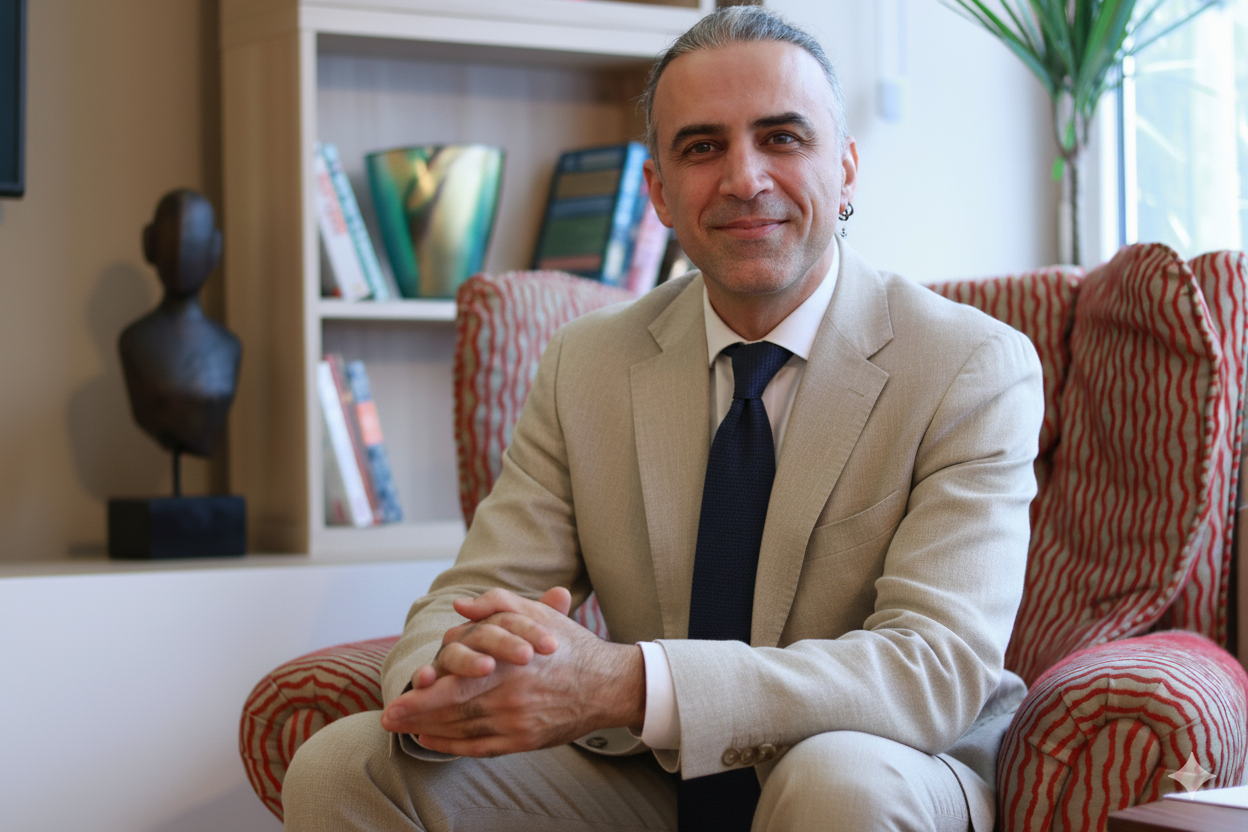
 Prof. Dr. Ali KeyvanPsychiatrist and Psychotherapist · Updated: 16 February 2024

Eating disorders arise when eating behaviour, and the feelings and thoughts connected with food, cause a person serious distress. Dieting is a common trigger for their development. Preoccupation with food, weight and appearance becomes so extreme that it harms the person’s health, relationships and daily activities.
Eating disorders are not only about food and weight. Although physical signs may seem to be in the foreground, they go hand in hand with serious psychiatric problems. An eating disorder can be seen as an attempt to find an external solution to inner turmoil. Underlying causes have been linked to difficult childhood experiences, low self-esteem, depression, a sense of losing control, feelings of worthlessness, identity confusion and problems with communication in the family.
Types of eating disorder
Anorexia nervosa
A psychological disorder, seen especially in young women, in which the person severely restricts eating and maintains a dangerously low body weight, often while remaining very active.
Bulimia nervosa
An eating disorder in which the person regularly eats very large amounts of food while feeling a loss of control, and then uses methods such as vomiting or laxatives (purging) to prevent weight gain.

Binge eating disorder
Recurrent episodes of binge eating. A binge is eating, within a limited period (usually less than two hours), an amount of food clearly larger than most people would eat in similar circumstances, with a sense of being unable to stop.
Other specified eating disorders
Disorders with other abnormal eating patterns, such as overeating without trying to compensate afterwards, or chewing food and spitting it out without swallowing.
Eating disorders are very serious psychiatric disorders. Without treatment, they can lead to serious health problems (severe weight loss, menstrual irregularities, cognitive impairment and more) and even death. Anorexia nervosa and bulimia nervosa have among the highest mortality rates of all psychiatric illnesses, and patients with anorexia nervosa are at particular risk, even in countries with well-organised eating disorder services. The best way to help someone close to you with an eating disorder is to encourage them to see a psychiatrist. Delay allows the illness to become chronic and makes treatment harder.

Treatment
- Treatment should be led by a psychiatrist, using a multidisciplinary approach tailored to the patient (in collaboration with internal medicine, gynaecology and other specialties).
- Combining several approaches helps the patient more than relying on any single one.
- The treatment algorithms of the Psychiatric Association of Türkiye (TPD) provide a reliable framework.
- Psychotherapy is indispensable, and cooperation with the family and its appropriate involvement in treatment are important.
- The first goal is often to gain the cooperation of a patient who may have little wish for treatment.
- Cognitive behavioural therapy and psychodynamic approaches are used in psychotherapy, and family therapy plays an important role. In severe cases, hospital admission is essential.
Below you will find a comprehensive scientific article by Prof. Dr. Ali Keyvan on eating disorders, one of the most challenging and most misunderstood groups of conditions in modern psychiatry, with some of its highest mortality rates.
Eating disorders: an assessment at the intersection of mind, body and culture
Author: Prof. Dr. Ali Keyvan, Psychiatrist
Abstract
Eating disorders are severe, potentially life-threatening psychiatric illnesses characterised by serious and persistent disturbances in eating behaviour, body image and thoughts about weight. This article takes a holistic look at the clinical phenomenology, multifactorial aetiology and evidence-based modern treatment of these disorders, especially anorexia nervosa (AN), bulimia nervosa (BN) and binge eating disorder (BED). It emphasises that eating disorders are not simply a “diet out of control” but a complex syndrome in which deep psychological pain, a need for control, low self-esteem and a search for identity are expressed through the body and food. The section on aetiology covers biological factors such as genetic and temperamental vulnerability, psychodynamic and systemic theories such as Hilda Bruch’s concept of the “struggle for autonomy” and Salvador Minuchin’s “psychosomatic family”, cognitive behavioural explanations of faulty schemas and vicious circles, and the role of the sociocultural “thin ideal”. The treatment section stresses that these disorders cannot be treated by a single clinician and highlights the importance of a multidisciplinary team of psychiatrist, psychotherapist, dietitian and internist. It details evidence-based psychotherapies such as family-based treatment (FBT) and enhanced cognitive behavioural therapy for eating disorders (CBT-E), as well as the targeted role of psychopharmacology. It concludes that recovery is possible, but that it is usually a long process requiring patience, aimed at restructuring not only eating behaviour but the person’s relationship with themselves and the world.
Keywords: eating disorders, anorexia nervosa, bulimia nervosa, binge eating disorder, body image, family-based treatment (FBT), cognitive behavioural therapy (CBT), multidisciplinary approach.
1. Introduction: the meaning beyond food
When we meet a patient with an eating disorder in clinical practice, we are not simply facing someone trying to lose or gain weight. We are facing a person trying to control, through eating, one of the most basic acts of human existence, a pain, chaos, anger or emptiness they cannot put into words. Eating disorders are not a diet or a lifestyle choice; they are serious, complex illnesses with the highest mortality of all psychiatric disorders (especially anorexia nervosa). The body becomes a battlefield, calorie charts a creed, and the scales a judge of self-worth. This battle exhausts not only the patient but also the family and friends who watch helplessly. This article aims to shed light on the many layers of this difficult illness and to explain the hopeful treatment paths modern psychiatry offers.
2. Classification of clinical pictures
DSM-5-TR describes three main eating disorders:
Anorexia nervosa (AN): its core feature is deliberately restricting energy intake so that body weight stays below the minimum normal for age and height. Despite this low weight, the person has an intense fear of gaining weight or becoming fat and perceives their body and weight in a distorted way (for example, still feeling “fat” while extremely thin). Self-worth is entirely tied to body shape and weight. There are two subtypes: the restricting type (weight loss through dieting, fasting or excessive exercise alone) and the binge-eating/purging type (restriction plus episodes of binge eating and purging behaviours such as vomiting or laxative use).
Bulimia nervosa (BN): characterised by recurrent binge-eating episodes in which the person eats, within a short time and with a sense of loss of control, much more food than they normally would. These episodes are followed by recurrent, inappropriate compensatory behaviours to prevent weight gain (self-induced vomiting, laxative or diuretic misuse, excessive exercise, fasting). The cycle is accompanied by intense shame, guilt and self-loathing. The main difference from anorexia is that people with bulimia are usually of normal or slightly above-normal weight.
Binge eating disorder (BED): like bulimia, it involves recurrent binge-eating episodes, but unlike bulimia these are not followed by compensatory behaviours. Binges usually happen alone, quickly and until the person feels physically uncomfortable, and are followed by marked distress, guilt or disgust. BED is often associated with obesity.
3. Aetiology: a complex, multifactorial picture
Eating disorders have no single cause. The biopsychosocial model offers the most valid framework for understanding how they develop.
A. Biogenetic background: eating disorders cluster strongly in families, pointing to a strong genetic predisposition. Temperamental traits such as perfectionism, impulsivity, a tendency to anxiety and obsessiveness are heritable and are risk factors. Abnormalities in neurotransmitter systems such as serotonin and dopamine, which regulate appetite, impulses and reward, also play a part.
B. Psychodynamic and family systems views: the search for control and identity
Hilda Bruch conceptualised anorexia nervosa as a struggle to develop an “effective, autonomous self”. According to Bruch, a child who grows up with an overly intrusive, demanding parent (often the mother) who does not allow the child to recognise their own emotional and bodily signals feels they have no control over their own life. Refusing food becomes the first powerful “No!” the child says. Controlling the body becomes a metaphor for controlling one’s whole life.
Salvador Minuchin described the “psychosomatic family” model. These families are highly enmeshed, overprotective, rigid and conflict-avoidant. In this system, the child’s eating disorder acts as a “lightning rod” that diverts attention from an underlying marital conflict between the parents. The family unites around the “sick child” and avoids facing the real problem.
C. The cognitive behavioural model: focuses on the cognitive distortions and behavioural cycles that maintain eating disorders. There is a “core belief” in which self-worth is built almost entirely on weight and body shape. Rigid thoughts such as “If I’m not thin, I’m worthless” lead to extremely strict dieting rules. The inevitable breaking of these rules triggers a binge, which leads to guilt and compensatory behaviour, sustaining the vicious circle of bulimia.
D. Sociocultural pressure: the myth of the “ideal body”: the unrealistic “thin ideal” promoted by the media and social media, particularly in Western societies, fosters body dissatisfaction and dieting among young people and lays the ground for eating disorders.

4. Treatment: a multidisciplinary, personalised approach
Treating eating disorders is too complex for a single professional and must be carried out by a multidisciplinary team.
A. The backbone of treatment, the multidisciplinary team: an ideal team includes an internist or paediatrician to manage the medical condition, a dietitian to rebuild eating patterns, a psychologist or psychotherapist to provide psychotherapy, and a psychiatrist to coordinate the whole process and manage co-occurring conditions (depression, anxiety) and any necessary medication.
B. Medical stabilisation and nutritional rehabilitation: especially in anorexia nervosa, the first and most important step for a patient at a life-threateningly low weight is medical stabilisation and weight restoration. Adequate nourishment of the brain is a prerequisite for psychotherapy to work. This sometimes requires hospital admission.
C. Evidence-based psychotherapies:
Family-based treatment (FBT / the Maudsley approach): considered the “gold standard” for anorexia nervosa in adolescents. The therapist empowers the parents as allies “against the illness”. In the first phase, control over eating is temporarily handed to the parents to restore the young person’s nutrition; as weight is restored, control is gradually returned to the adolescent.
Enhanced CBT for eating disorders (CBT-E): the most effective method for adults and adolescents with bulimia nervosa and binge eating disorder in particular. It focuses on changing dysfunctional behaviours and thoughts about eating, weight and body shape.
D. The role of psychopharmacology:
Anorexia nervosa: no medicine has been proven to restore weight or correct the core symptoms. Medication is mainly used for co-occurring depression and anxiety.
Bulimia nervosa: high-dose SSRIs (especially fluoxetine) have evidence-based effectiveness in reducing the frequency of binge–purge cycles.
Binge eating disorder: SSRIs and lisdexamfetamine, a medicine for attention deficit hyperactivity disorder, have been found helpful in reducing the frequency of binges.
5. Conclusion
An eating disorder is a cry from the soul expressed through the body. Behind it lie deep human needs for control, identity, autonomy and acceptance. Recovery is not only the normalisation of weight or eating habits but a process in which the person learns to meet these deep needs in healthier ways and makes peace with themselves and their body. Although the journey is difficult and long, full recovery is entirely possible with the right multidisciplinary support and evidence-based treatment.
6. References
American Psychiatric Association. (2022). Diagnostic and Statistical Manual of Mental Disorders, 5th Ed., Text Revision (DSM-5-TR).
Bruch, H. (1978). The Golden Cage: The Enigma of Anorexia Nervosa. Harvard University Press.
Fairburn, C. G. (2008). Cognitive Behavior Therapy and Eating Disorders. Guilford Press.
Le Grange, D., & Lock, J. (2010). Treatment Manual for Anorexia Nervosa: A Family-Based Approach. Guilford Press.
Minuchin, S., Rosman, B. L., & Baker, L. (1978). Psychosomatic Families: Anorexia Nervosa in Context. Harvard University Press.
Stahl, S. M. (2021). Stahl’s Essential Psychopharmacology: Neuroscientific Basis and Practical Applications. Cambridge University Press.
This page is for information only and does not replace diagnosis or treatment. If you have similar symptoms, please consult a mental health professional.

Your psychiatrist
Prof. Dr. Ali Keyvan
Prof. Dr. Ali Keyvan is a psychiatrist and psychotherapist. He practises, teaches and supervises cognitive behavioural and dialectical behaviour therapy as well as psychodynamic therapy and group analysis, and is a founding member of the Istanbul Group Analysis Association (IstGA). He sees clients at his clinic in Nişantaşı, Istanbul, and online.
Impulse and behaviour


