Psychoanalytic school
What Is Psychoanalytic Group Therapy (Group Analysis)?
How psychoanalytic group therapy works, its history from Foulkes and Bion, and who can benefit from weekly 90-minute groups.
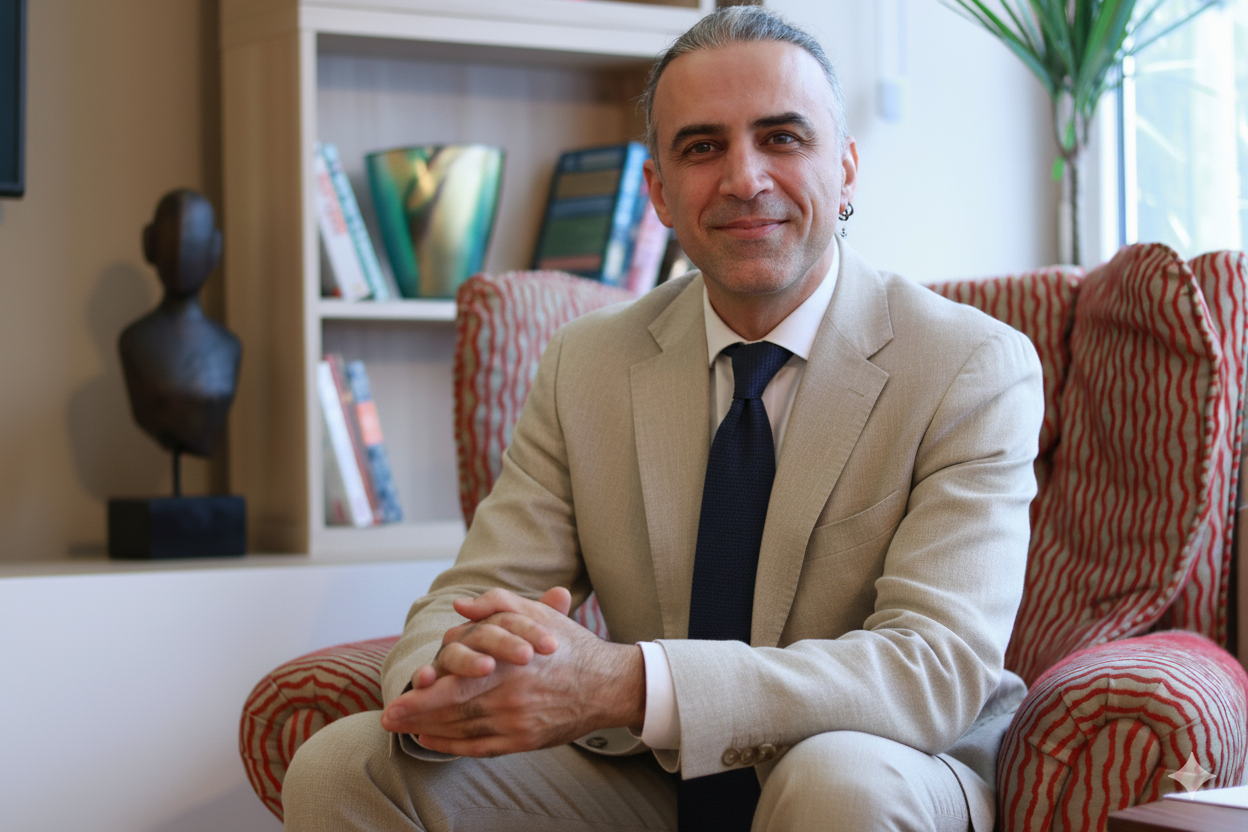
 Prof. Dr. Ali KeyvanPsychiatrist and Psychotherapist · Updated: 30 October 2026

“The aim and effectiveness of psychoanalytic group therapy is not that of a symptom-focused treatment based on relief, reassurance or encouragement. A layer is opened up, and it deals with neurotic conflicts and suffering at a very fundamental level: changing the functioning of the ego and superego and redistributing the libido, mobilising the foundations of character structure, and making radical changes in personality possible, or at least enabling it to change substantially. It can therefore only be compared with psychoanalysis or a similarly deep-working method of psychotherapy…”
Psychoanalytic group therapy seeks to improve a person’s communication with themselves and with others. It works on the interpretation of unconscious processes in relationships and on how these affect the emotional and behavioural patterns and coping strategies in the person’s personal and social life.
Psychoanalytic group therapy is a theoretical and practical method that approaches the individual in the context of the group and society. It draws on the psychoanalytic approach but is an innovative method that is compatible with, and integrates, many other theories. It works through a sense of belonging that develops over time, a feeling of safety, and an important and striking confrontation that makes relearning possible.
Psychoanalytic group therapy was designed to allow intensive, in-depth work, helping people encounter their inner world and understand how that world relates to others. It is designed for people who want to grow, increase their self-awareness, improve their interpersonal communication, discover their personal abilities, build an identity, bring about change in the basic structures of their personality, refine themselves and make the fullest use of their potential.
Why psychoanalytic group therapy (group analysis)?
So what is group analysis? It is a highly effective therapy that produces results. It looks for answers and solutions to a person’s difficulties, problems and questions about themselves, others and existence. Psychoanalytic group therapy can help us overcome our problems, grow psychologically, recover from psychiatric symptoms or disorders that appear in many different forms, hold on to life more firmly, stand on our own feet and, perhaps most importantly, understand and recognise ourselves better.
It costs less than individual therapy. It takes place in weekly sessions of 90 minutes. It works on the foundations of character structure and aims to bring about radical, or at least substantial, change in personality. In this sense, any persistent, unchanging problem that seems stuck in a vicious circle falls within the scope of psychoanalytic group therapy.
In short, psychoanalytic group therapy is designed for people who want to grow, increase their awareness, improve their interpersonal communication, discover their personal abilities, build an identity, change the basic structures of their personality, refine themselves and use their potential to the full. It is a source of healing, growth and change.
History of psychoanalytic group therapy (group analysis)
Psychoanalytic group therapy began with the original work of Siegmund Heinrich Foulkes and Wilfred Ruprecht Bion in the 1940s. Foulkes and Bion started the first group analysis sessions in 1942. Foulkes founded the Group Analytic Society (GAS) in London in 1952 and the Institute of Group Analysis (IGA) in 1971. Both GAS and IGA helped group analysis spread around the world and enabled group analysts to be trained in many countries.
Today, group analysis training is offered and group analysts are trained in many countries, including the Scandinavian countries, Germany, Italy, Greece, Ireland, Portugal, Russia, Israel and Türkiye. In Türkiye, the Istanbul Institute of Group Analysis, of which I am one of the founding members, was established in 2014. The Istanbul Group Analysis Association (IstGA) was officially founded by Prof. Dr. Ali Keyvan in 2026 and continues its activities.
Psychoanalytic group therapy from Foulkes’s perspective
According to Foulkes, from the moment of birth human beings inevitably find themselves within a social network. For this reason he considered psychoanalytic group therapy valuable for building communication, relationships and dialogue. Asked what the aim of group analysis is, the answer is to make psychotherapy, change and growth possible within a framework as close as possible to everyday life. In his 1948 book Introduction to Group-Analytic Psychotherapy, Foulkes wrote:
“It is wrong to treat the whole as the sum of its parts. Each individual is inevitably and fundamentally determined by the community and the world in which they live… inner and outer, constitutional and environmental, individual and community, phantasy and reality, body and mind… cannot be separated from one another at any level except by artificial isolation.”
In other words, in order to understand themselves better, and therefore to steer their lives in a healthier direction, individuals cannot ignore the environment they live in. Human beings acquire an identity through the world they are part of. A person can achieve the wish to change, or to bring about change, only by attending to their bonds with the other and with others.
In Foulkes’s theory of group analysis, he describes a therapeutic process in which the leader, initially seen by the group as having descended from the heavens, moves from being a primitive authority figure to being perceived as a mature leader. In his writings, Foulkes said that he was inspired in developing the idea of group analysis by the writings of Trigant Burrow and by certain plays he had seen. He wrote that he was strongly influenced by Pirandello’s Six Characters in Search of an Author and especially by Maxim Gorky’s The Lower Depths. After seeing The Lower Depths, he wrote: “A play without a hero, a leaderless group on the stage, moved by powerful and anonymous forces… I kept thinking about the pathogenic and therapeutic forces of the theatre and of everyday life.”
Freud’s work played a central role in Foulkes’s psychotherapeutic approach. Later on, however, he can be said to have adopted the views and theories of Norbert Elias more (symbol theory and others). In other words, by combining the inward-looking and outward-looking perspectives of these two great thinkers, he brought something new to psychology. Foulkes opposed separating the individual from society. He argued that both the individual and the individual-in-context must be understood within the matrix (web, network) made up of individuals.
Group analysis contains the therapeutic factors that also exist in individual psychoanalysis: bringing the repressed unconscious into consciousness, catharsis, insight, analysis of defence mechanisms and so on. But there are also therapeutic factors specific to the group, among them mirror reaction, exchange, activation, active participation, social interaction, communication, social integration and activation of the collective unconscious.
In the analytic group, communication moves from a primitive, autistic level towards conscious self-expression, and carries its therapeutic effect with it. It creates a shared space within the therapeutic group in which everyone can take part and understand one another. In this process, members begin to understand the “language” of symptoms, symbols, dreams and, of course, verbal communication. The conductor (analyst, therapist) strives to deepen and broaden every member’s power and range of expression, while also helping them understand deeper, unconscious levels.
Psychoanalytic group therapy takes place within a psychoanalytic frame (time, place and so on) with the participation of the members and the conductor. It usually consists of weekly sessions of an hour and a half. The group is open to new participants and allows members to leave when they have reached their goals or feel they have reached a satisfying point in their personal process. The length of therapy varies according to individual needs and overlaps in many ways with the process of individual psychoanalysis.
To learn more about the process of psychodynamic and psychoanalytic therapy, you can read our article at the link.
This page is for information only and does not replace diagnosis or treatment. If you have similar symptoms, please consult a mental health professional.

Your psychiatrist
Prof. Dr. Ali Keyvan
Prof. Dr. Ali Keyvan is a psychiatrist and psychotherapist. He practises, teaches and supervises cognitive behavioural and dialectical behaviour therapy as well as psychodynamic therapy and group analysis, and is a founding member of the Istanbul Group Analysis Association (IstGA). He sees clients at his clinic in Nişantaşı, Istanbul, and online.