Theory
Was Freud a Pansexualist?
Why Freud was accused of pansexualism, what libido and sublimation really mean, and how this differs from modern pansexuality.
 Prof. Dr. Ali KeyvanPsychiatrist and Psychotherapist · Updated: 2 October 2021

In his Three Essays on the Theory of Sexuality, Freud argued that infantile sexuality lies at the foundation of adult sexuality and is of critical importance (Quinodoz, 2008). In a sense, he thereby shook society’s ideas about the “innocence” of the child (Abrevaya, 2013).
These ideas gave rise to a number of misunderstandings that led to him being labelled a “pansexualist”.
Freud addressed this in 1920, in the last preface he wrote for the Three Essays. He lamented that psychoanalysis had been labelled pansexualism and that the theory was claimed to explain everything through sexuality in the narrow sense of the word. He replied by pointing out how close the broader idea of sexuality came to the Eros of the “divine Plato”.
He said that observers who had the patience and a reliable method to take an analysis back to the patient’s childhood would be in a position to confirm the hypotheses put forward about the beginnings of human sexual life (Freud, 2006; trans. Kapkın). Freud answered similar criticisms, directed not only at his theory of sexuality but also at his understanding of dreams, in a letter to Professor Claparède:
“I have never maintained that dreams are full of sexual wishes, and have often stated the opposite. But this has had no effect, and people have continued to repeat the same things.” (25 November 1920) (1921e: 214–215).
Below you will find a scientific article on the complex and often misunderstood connection between the description of Sigmund Freud’s theories as “pansexualist” and the present-day definition of pansexual identity.
Freud’s “pansexualism” and modern pansexuality
Author: Prof. Dr. Ali Keyvan, Psychiatrist
Abstract
This article aims to clarify the conceptual differences and historical context between the criticism of “pansexualism” directed at Sigmund Freud, the founder of psychoanalysis, and “pansexuality”, defined in the 21st century as a sexual orientation identity. The shared prefix “pan-” (all) often leads to the two terms being confused, or to the assumption of a direct continuity between them. The article first examines how Freud’s “pansexualism” was a criticism of the broad scope of his theories of libido and psychosexual development, which defined sexuality as a psychic energy underlying all human motivation, far beyond genital acts. It then defines modern pansexuality as an orientation that goes beyond the gender binary, in which sexual attraction is directed at the person regardless of the partner’s gender identity. The comparative analysis shows that the focus of Freud’s theory is “the source of psychic energy”, while the focus of modern pansexuality is “the object of sexual attraction”. It concludes that although Freud’s theory radically broadened the definition of sexuality for its time, its underlying binary assumptions about sex are fundamentally at odds with the inclusive, anti-binary philosophy of modern pansexuality.
Keywords: Sigmund Freud, psychoanalysis, pansexuality, pansexualism, libido, psychosexual development, sexual orientation, gender identity.
1. Introduction
Few theorists in the history of psychology and psychiatry have aroused as much admiration and as much fierce criticism as Sigmund Freud. One of the most common and oldest criticisms is that he was a “pansexualist”, that he saw sexuality at the root of all human behaviour, fantasy, neurosis and even every achievement of civilisation. On the other hand there is “pansexual” identity, which has gained increasing visibility in recent years and is an important part of the spectrum of sexual orientation. Although the shared prefix “pan-” creates the illusion of a bridge between these two concepts, this article aims to show that they belong to entirely different historical and theoretical worlds.

2. Freud’s “pansexualism”: the broad scope of libido theory
Freud never used the term “pansexualist” about himself; it was a label used by critics to simplify and attack his theories. At the heart of the criticism lies the revolutionary breadth Freud gave to the concept of “sexuality”. For Freud, sexuality was not limited to adult genital union.
Libido: Freud defined libido not only as sexual desire but as the psychic energy underlying the life instinct (Eros). This energy is the driving force behind all pleasure-seeking acts. The pleasure a baby takes in sucking at the breast, the creative satisfaction a painter takes in the brush, or the intellectual delight a scientist takes in solving a problem are, from a Freudian perspective, differentiated and sublimated expressions of libido.
Stages of psychosexual development: Freud proposed that libido focuses on different erogenous zones during childhood: the oral stage (mouth), the anal stage (anus) and the phallic stage (genitals). For Freud, this was evidence that sexuality is innate and shapes personality development from the first moments of life. This claim was shocking to the Victorian morality of the time and fuelled the criticism that he “reduced everything to sex”.
Sublimation: Freud’s strongest answer to the charge of “pansexualism” is the concept of sublimation. In his view, civilisation’s greatest achievements (art, science, philosophy, law) were made possible by preventing raw sexual and aggressive drives from reaching direct satisfaction and channelling this energy into socially acceptable, creative and productive outlets. Freud therefore does not reduce everything to the sexual act; rather, he claims that sexual energy is the fuel of civilisation.
In short, Freud’s “pansexualism” is the theory that psychosexual energy (libido), not the sexual act, is the universal source of human motivation.
3. Modern pansexuality: an orientation beyond gender identity
Modern pansexuality, by contrast, is not a theory of motivation but a sexual orientation and identity. Rooted in queer and gender theory of the late 20th century, it has become more prominent in the 21st century.
Definition: pansexuality is the potential to feel sexual, romantic or emotional attraction to people regardless of their gender identity, biological sex or gender expression. The prefix “pan-” (all) indicates that this orientation includes men, women, trans people, non-binary people, genderfluid people and all other gender identities.
Rejection of the gender binary: the distinguishing feature of pansexuality is that it takes the object of attraction beyond the “man–woman” binary. Attraction is directed at the person, not at their gender label, reflecting the idea that “hearts have no gender”.
In short, modern pansexuality is an orientation in which the potential object of sexual attraction is universal and includes all genders.
4. Comparison and conclusion: two separate worlds
Comparing the two definitions shows that the supposed “connection” is a misunderstanding:
Difference of focus: Freud’s “pansexualism” focuses on the source of human behaviour (libido underlies all motivation). Modern pansexuality focuses on the object of sexual attraction (people of all gender identities can be potential objects of attraction).
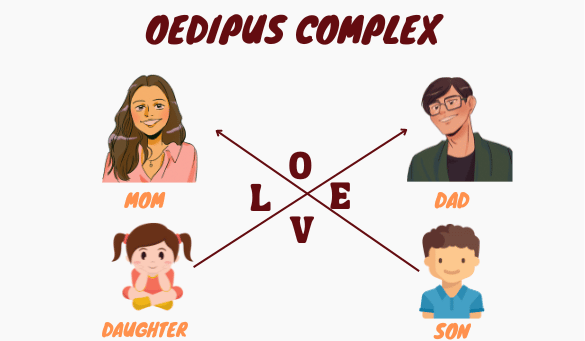
Understanding of gender: this is the most fundamental contradiction. Freud’s whole theory (the Oedipus complex, penis envy and so on) rests on a rigid gender binary (male/female) and heteronormative assumptions; he even regarded homosexuality as a “developmental deviation”. Modern pansexuality, in contrast, is built precisely on rejecting and transcending this binary.
Historical meaning: calling Freud a “pansexualist” was a way of criticising him as “an obsessive who reduced everything to sex”. Calling someone “pansexual” today is a way of recognising their sexual identity and orientation.
Describing Freud as “pansexual” in the modern sense, or seeing his theory as a forerunner of pansexuality, is therefore a major anachronism. Freud radically broadened the concept of sexuality within the limits of his own time; pansexuality is the product of a revolution in gender and identity that Freud could never have imagined. The only real “connection” between them is that both, in their own historical periods, challenged established and narrow ideas about sexuality.
References
Abrevaya, E. (2013). Kadınlığın Uzun ve Dolambaçlı Yolu [The Long and Winding Road of Femininity]. Istanbul: Bağlam Yayınları.
Freud, S. (2006). Cinsellik Üzerine [On Sexuality]. Trans. Emre Kapkın. Istanbul: Payel Yayınları.
Quinodoz, J.-M. (2008). Reading Freud. London: Routledge.
This page is for information only and does not replace diagnosis or treatment. If you have similar symptoms, please consult a mental health professional.

Your psychiatrist
Prof. Dr. Ali Keyvan
Prof. Dr. Ali Keyvan is a psychiatrist and psychotherapist. He practises, teaches and supervises cognitive behavioural and dialectical behaviour therapy as well as psychodynamic therapy and group analysis, and is a founding member of the Istanbul Group Analysis Association (IstGA). He sees clients at his clinic in Nişantaşı, Istanbul, and online.