Group analysis
Psychoanalytic Group Therapy – Group Analysis
Prof. Dr. Ali Keyvan's review of group analysis: Foulkes, the Frankfurt School, Bion's basic assumptions and the therapeutic factors of analytic groups.
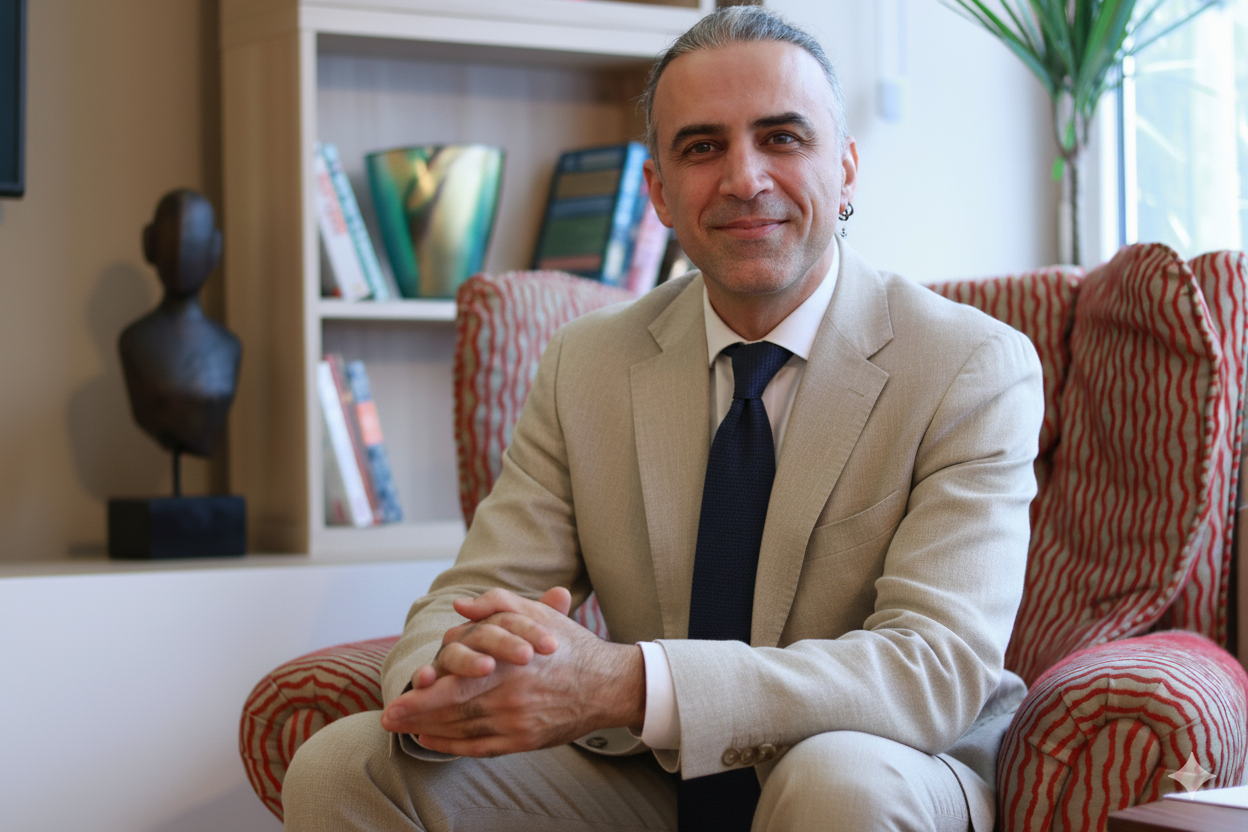
 Prof. Dr. Ali KeyvanPsychiatrist and Psychotherapist · Updated: 20 September 2021
Group analysis: psychoanalytic group therapy. A review
Istanbul Aydın University, Türkiye · dr.alikeyvan@gmail.com · https://orcid.org/0000-0001-6396-7671
Abstract
Psychoanalytic group therapy started with the original work of Siegmund Heinrich Foulkes and Wilfred Ruprecht Bion in the 1940s. It is a treatment method that originates primarily from psychoanalytic theories and is compatible and integrated with other psychotherapeutic theories. Designed to provide an intensive and in-depth study, it aims to understand the individual’s encounter with his inner world and its relationship with the other. Today, group analysis training is given in many countries and group analysts are trained. For the first time in Türkiye, based in Istanbul, under the name of the “Istanbul Group Analysis Association (IstGA)”, psychoanalytic group therapists are being trained in cooperation with IIGA (Israel Institute of Group Analysis), EFPP (European Federation for Psychoanalytic Psychotherapy), GASI (Group Analytic Society International) and EGATIN (European Group Analytic Training Institutions Network). This article is the first comprehensive research paper on group analysis in Türkiye. It discusses the history, establishment, founders and theories of group analysis, with the aim of developing and spreading group analysis in our country and eventually paving the way for people to access this valuable treatment method.
Keywords: psychoanalytic group psychotherapy, group analysis, Foulkes, Bion.
Received: 01.03.2021 – Accepted: 01.06.2021. DOI: 10.17932/IAU.IAUSBD.2021.021/iausbd_v13i3001. Review article, checked with iThenticate. Copyright © İstanbul Aydın Üniversitesi Sosyal Bilimler Dergisi.
Introduction
Group psychotherapies began in the 1940s (Yalom, 1975). The first applications were psychoanalytic, psychodrama and Gestalt groups. In later years many other group psychotherapy methods with very different technical approaches were described, including brief group therapies, supportive-expressive, cognitive behavioural, psychoeducational, self-help and dynamic-interactional groups (Yalom, 1975).
Psychoanalytic group therapy (group analysis) is a psychotherapy method put forward by S. H. Foulkes and W. R. Bion, and over almost a century many scientists have contributed to it. Group analysis is a treatment method in which individual therapy is worked through in a group (Foulkes, 1964).
Group analysis takes place within a psychoanalytic frame (time, place and so on) with the participation of the members and the conductor. It is usually held once a week in sessions of an hour and a half. The sessions are a psychotherapy marathon held in an unchanging frame, at a steady rhythm, on the same day, at the same time and in the same place, allowing in-depth work. A group usually consists of 6–8 members who are strangers to one another. Members and therapist (conductor) sit in a circle.
In the group, each person re-creates their typical conflicts and patterns of behaviour, and transferences develop towards the conductor, the other members and the group itself. For this reason, group analysis involves horizontal and vertical transferences and simple and complex transference processes. While listening to an individual, the conductor also considers that person’s position and place within the group matrix. The group is open to new participants and allows members to leave when they have reached their goals or feel they have reached a satisfying point in their personal process (a slow-open group). The length of therapy varies according to individual needs and overlaps in many ways with the process of individual psychoanalysis (Foulkes, 1964).
Group analysis aims to help individuals encounter their inner world and understand how that world relates to others. Through the relationships that develop, unconscious dynamics at the individual and group levels are expected to reach a level at which they can be worked on and interpreted. The sense of belonging that develops over time comes with an important, striking confrontation that makes feeling safe and relearning possible. Psychoanalytic group therapy is designed to provide intensive, in-depth work (Foulkes, 1964).
In the analytic group, the individual is seen as a nodal point in an interconnected network, influencing and influenced by the interpersonal processes that make up the dynamic field (the matrix). The analytic group is a working frame in which the social aspects of the individual can be observed, so that the person can be observed and treated in their true nature as a social being rather than in individual isolation (Pines, Hearst & Behr, 1982).
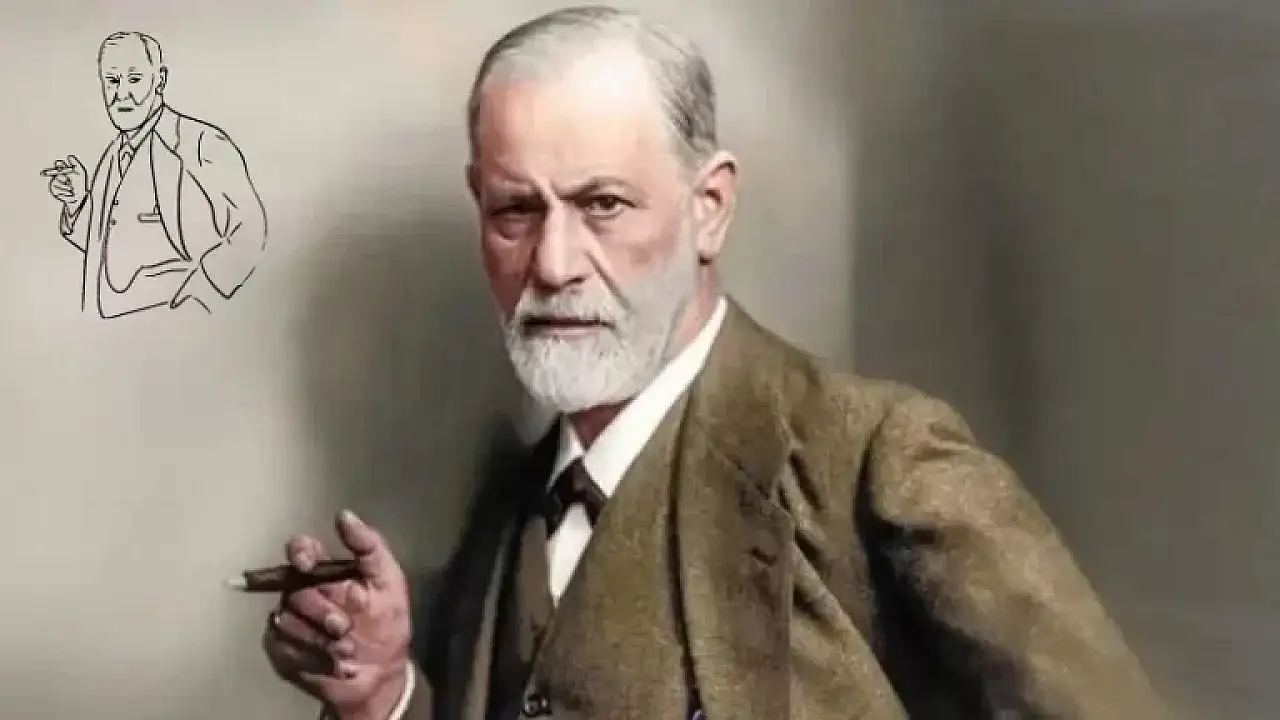
Siegmund Heinrich Foulkes
Foulkes was a German-British psychiatrist and psychoanalyst. His name appears as Siegmund Heinrich Fuchs in his German passport and as Siegmund Heinrich Foulkes in his British one. Born in Karlsruhe in 1898, he died in London in 1976 at the age of 77. He graduated in medicine in 1923, having studied at Heidelberg, Munich and Frankfurt am Main. In 1924 he completed his thesis in paediatrics and began working in neurology with Goldstein. In Vienna he worked in psychiatry with Otto Pötzl and Paul Schilder, and during this period became interested in Gestalt psychology and group therapy. His interest in Freudian psychoanalysis took him to Vienna on Landauer’s recommendation (Hakeem, 2008). He was analysed by Helene Deutsch and supervised by Hermann Nunberg. From the 1920s onwards he worked intensively with patients on the analytic couch, and after 1930 he joined the Frankfurt Institute as a psychoanalyst. In 1933, however, under Hitler’s growing oppression, he emigrated to England as a refugee with his wife and three children at the invitation of Ernest Jones, and became a member of the British Psychoanalytical Society (Foulkes, 1990).
Foulkes led his first analytic group in Exeter, Devon, in 1939, and in 1942 developed group analysis at Northfield Military Hospital in Birmingham. There he worked with soldiers traumatised at the front during the Second World War. He spent the rest of his working life in London at St Bartholomew’s Hospital until his retirement in 1963. Before retiring he founded the Group Analytic Society (GAS) in 1952, and after retiring he founded the Institute of Group Analysis (IGA) in London in 1971. Both GAS and IGA helped group analysis spread around the world and enabled group analysts to be trained in many countries (Foulkes, 1990).
Foulkes (1964) said that the idea of group analysis as a form of treatment first took root in his mind in his mid-twenties, after reading Trigant Burrow’s writings; he would carry out his first therapeutic experience 15 years later. Besides Burrow, Foulkes said that some of the plays he had seen inspired his thinking about group analysis. He wrote that he was strongly influenced by Pirandello’s Six Characters in Search of an Author and Maxim Gorky’s The Lower Depths, describing the latter as “a play without a hero, a leaderless group on the stage, moved by powerful and anonymous forces” (Foulkes, 1964), which made him think about the pathogenic and therapeutic forces of the theatre and of everyday life. In 1926 Foulkes wrote to Sigmund Freud about his ideas on analytic group psychotherapy, but his idea of group analysis was essentially shaped in the Frankfurt School (Foulkes, 1990).

The Frankfurt School
While Goldstein headed the department of neurology, the Frankfurt School also housed a Gestalt research centre. In addition, an institute for social research was opened in 1924 and a psychoanalytic institute in 1929. The institute gave priority to topics such as commercial movements, economic power as coup and revolution, the sociological aspects of Marxism, Bolshevism and anti-Semitism, the masses and political parties, the views of social classes and the impoverishment of Germany. The Frankfurt School thus became an important research centre where philosophy, sociology and psychoanalysis met (Rothe, 1989).
Weekly meetings held in a circle and hosted by Horkheimer were attended by figures such as Adorno, Fromm, Elias, Goldstein, Pollock, Löwenthal, Mannheim and Foulkes. These meetings were the centre from which “Critical Theory” emerged, as members of the institute, left-wing intellectuals, tried to adapt Marx’s social theory. Adorno wrote that these meetings, known among students as “Café Marx”, involved friendly but very intense discussions. Horkheimer hoped to find, within the sociological structure, an explanation of the psychological “cement” holding society together (Horkheimer, 1932). With the opening of the psychoanalytic institute in 1929, the relationship between sociology and psychology became concrete; the institute was headed by Karl Landauer, who had been analysed by Freud.

Unlike the Berlin Institute, the Frankfurt Institute was initially focused not on training psychoanalysts but on scientific and theoretical interests. Its multidisciplinary structure raised two main questions: whether authority is an important factor in social dynamics, and whether the family is the main social determinant of human susceptibility to authority. In the period before the Nazis came to power, the argument put forward was that the authoritarian family structure was linked to sociological and political totalitarian ideology, and that it involved not only the middle class but also the working class (Rothe, 1989).
Erich Fromm headed social psychology at the time. In his view, all communities have a common libidinal structure made up of basic human drives and social factors, and this affects socio-political authority. Fromm, who said that “the libidinal structure is anchored both in the individual and in the group made up of individuals”, emphasised the importance of the libidinal structure in the creation of ideologies (Fromm, 1930).
Adorno’s theoretical interest in psychoanalysis shows in his work. His studies of the cultural superstructure were primarily concerned with the aesthetic and social functions of music. In his sociological analysis of music he pointed to the relationship between the orchestra and its conductor: “the orchestra expects the conductor to know every bar, hear every wrong note, notice every ambiguity, hold the whole orchestra together with a single gesture, make them play together properly and know how they imagine the music… The musicians’ attitude towards their conductor is ambivalent; hatred of his intellectual authority is mixed with the wish to obey” (Adorno, 1962).
The rich and varied work of the Frankfurt School on authority inspired Foulkes’s in-depth, discriminating study of the functions of the group leader (Rothe, 1989). Indeed, inspired by Adorno, Foulkes proposed using the word “conductor” instead of “leader” in group analysis and insisted that the term leader should not be used (Foulkes, 1975).
Another figure in the Frankfurt School who deserves mention is Mannheim, known as the most important German expert in the “sociology of knowledge”. After encountering psychoanalysis, he conceptualised “how far the individual and the group adapt in a climate of fluctuating values”. Searching at that time for a democratic method of education that could be set against the ruthless social integration of fascism, Mannheim said: “It is not possible to influence the whole field through psychoanalytic re-education; there are other forms that must be tried step by step.” He called these forms of collective re-education “socio-analysis or group (mass) analysis”, saying that “socio-analysis refers to the individual, the family and the whole social field, and makes group interactions more conscious”. In his view, modern psychology and sociology had not only developed reforms in the moral sphere but had also, through group analysis, begun to find new methods for re-adjusting the masses (Mannheim, 1943).
Goldstein’s influence on Foulkes is undeniable. In his writings he put forward ideas such as “the biological can only work within a dialectical cognitive frame and can in no way be analysed mechanically as evidence of the struggle for existence” and “what is real is the sociological phenomenon; social groups constantly follow their strong leaders, even when those leaders abuse their power and clearly harm the groups’ interests” (Rothe, 1989). Goldstein’s aim was to encourage sociologists to consider biological aspects without rushing to simplify parallels (Goldstein, 1936). Foulkes noted that in 1927 Goldstein presented his most important views on the relationship between psychoanalysis and neurology, and wrote that Goldstein pointed to “the deep and intimate psychoanalytic process’s lack of a grasp of the individual as a whole; the essence of Goldstein’s criticism is that isolating the psyche from the whole (the group) is as unacceptable as isolating any other part” (Foulkes, 1936).
Another figure whose work deeply influenced Foulkes was Norbert Elias, one of the important theorists of the 20th century: sociologist, psychologist, philosopher, historian and physician. Foulkes and Elias had a friendship that lasted many years, and Elias’s theories, above all his symbol theory and his theory of the civilising process, were influential in the development of group analysis (Foulkes, 1938). Elias criticised the line of thought that had continued since Descartes. He criticised structuralism for its ahistorical and static conception of society (its conservative tendency). In classical structuralism the individual appears entirely dependent on society; Elias instead treats subjects not as atoms but as figurations interdependent socially, culturally and economically. For Elias, civilisation is not something that reflects the West’s self-consciousness; it is the transformation of human feelings and thinking through the pressure created on emotions by external and internal influences. In other words, civilising means increasing emotional control, and the more civilised we become, the more pronounced our self-alienation becomes (Dalal, 1998).
Elias’s “symbol theory” is about uniting the dichotomies concerning human beings: “an attempt to build bridges between language and thought, the inner and the outer, the individual and society, the biological and the environmental, in short between all aspects of human beings” (Elias, 1991). Foulkes stressed the importance of Elias’s socio-genetic method for understanding the historical development of the superego. Elias tried to unite “the small history of the individual” and “the vast history of society”, and to show how, in Western society, the psyche formed an indissoluble bond with “sociogenesis”. “The historical battlefield now lies within the individual’s psyche. The social and psychological fields that make up the historical flow of events are mutually connected in a network,” he said (Dalal, 1998). These views of Elias were important in the development of the “collective unconscious” as one of the therapeutic factors of psychoanalytic group therapy.
Elias’s theories parallel Adorno’s views. Interestingly, Goldstein’s neurobiological theory of networks rejected the neuron theory, while Elias emphasised “the whole” in relation to its parts, against atomistic sociology. Foulkes’s concept of the group drew on both views (Dalal, 1998).
Within this rich intellectual environment in Frankfurt, Foulkes’s ideas on group analysis were sparked in the summer of 1932 after a joint seminar with Karl Landauer and Heinrich Meng on Freud’s Group Psychology and the Analysis of the Ego. Foulkes concentrated on the importance of the group’s effects on the individual (Rothe, 1989). In a 1971 paper he wrote: “Society is the ultimate unit and of great importance; there are forces belonging to the groups of which the individual is a member that he has internalised. Psychology can be abstracted neither at the individual nor at the group level. We cannot speak of the individual without reference to the group, just as we cannot speak of the group without reference to the individual. To grasp a person as a psychological whole, both the individual and the group levels must be kept in view” (Foulkes, 1971, 1990).
Foulkes’s theory of group analysis
Freud’s work played a central role in Foulkes’s psychotherapeutic approach, but Foulkes later also adopted the views and theories of Norbert Elias. By combining the inward-looking and outward-looking perspectives of these two great thinkers, he brought something new to psychology (Foulkes, 1964).
In his 1948 book Introduction to Group-Analytic Psychotherapy, Foulkes wrote: “It is wrong to treat the whole as the sum of its parts. Each individual is inevitably and fundamentally determined by the community in their context and the world in which they live. Inner and outer, constitutional and environmental, individual and community, phantasy and reality, body and mind and so on cannot be separated from one another at any level except by artificial isolation.” In his view, from the moment of birth human beings inevitably find themselves within a social network. He opposed separating the individual from society and argued that both the individual and the individual-in-context must be understood within the matrix (society) made up of individuals. The aim of psychoanalytic group therapy is to make psychotherapy, change and growth possible within a framework as close as possible to everyday life (Foulkes, 1948).
Foulkes thus said he had described a new method of group psychotherapy, and stressed that its results were very encouraging; he reported, and published in the scientific arena, courses of treatment with high rates of improvement and recovery. He noted that the name “group analysis” could be misunderstood and added: “This method is not doing psychoanalysis in a group. As an individual psychoanalyst for many years, I must emphasise that the psychoanalytic situation can only take place between one therapist and one patient, the psychoanalyst and the analysand. Group analysis, on the contrary, focuses on the dynamics that develop within the group, among all its members. ‘Group-analytic psychotherapy’ would be a more precise term, and its frame of reference is the ‘group as a whole’. As in all psychotherapies, the focus is on the individual” (Foulkes, 1964).
In terms of therapeutic factors, psychoanalytic group therapy first of all contains those present in individual psychoanalysis: bringing the repressed unconscious into consciousness, catharsis, insight, analysis of defence mechanisms and transferences and, most importantly, “working through”. But there are also therapeutic factors specific to the group, such as activation, exchange, mirroring, active participation, social interaction and communication. Some of the particular concepts and specific therapeutic factors Foulkes introduced into the literature are “mirroring”, “exchange”, “social integration”, “activation of the collective unconscious” and “resonance” (Foulkes, 1964).
In Foulkes’s model of group analysis, each individual brings a network of relationships from their own life into the group. The combination of the members’ networks forms the total network, and the relationships that begin to develop between members on the basis of this total network are woven like threads into a matrix. The matrix contains the secure bonds woven between individuals (Foulkes, 1966).
In his approach, Foulkes presented a clinical method that allows three psychological objects to take part in an integrative process. The number of members in a group may vary, but in the analytic setting only three categories of object can ever be spoken of: the member, the conductor and the group as a whole. “Free-floating discussion” is based on this model, which he called the “model of three”, and can be thought of as the counterpart in group analysis of free association in psychoanalysis (Foulkes, 1966).
What is wanted in the analytic process is for the group to move into spontaneous, informal participation and free discussion. The conductor gives very few instructions, and there is no set topic or plan. Although in the position of leader, the conductor refrains from actively directing the group, and so is like a mother “weaning” a group that wants to be led, a very strong wish. Weaning is unwelcome in groups, especially those with a high level of psychoneurosis, and undermines the strongest neurotic defensive positions. The more the conductor succeeds in weaning, the more active participation by members can be encouraged (Foulkes & Anthony, 2018).
The need to be understood and accepted in the group inevitably stimulates communication. Members’ personalities become more interactive, and their movements within the dynamic interaction can be observed. Different views, characters and symptoms are represented by real people. What is latent in one person is expressed manifestly in another. Both symptoms and defences can be observed in this interaction, and in this living setting their meanings and significance emerge. Members must be able to tolerate this experience. In the analytic process, individual and group change can be clearly observed (Foulkes, 1964).
In the analytic group, communication moves from a primitive, autistic level towards conscious self-expression, and carries its therapeutic effect with it. A shared space is established within the therapeutic group in which everyone can take part and understand one another. In this process individuals begin to understand the “language of symptoms”, symbols, dreams and verbal communication (Foulkes, 1964).
Wilfred Ruprecht Bion
Bion was born in September 1897 in the Punjab region of India; his father was an English engineer. At the age of eight he was sent to England for his schooling. He described this experience as a rupture from his mother and from the Indian nanny who was very special to him, and the years that followed as hard years. He served as a tank officer in the First World War and received the Distinguished Service Order, but after the trauma of the war he called the day he was decorated “the day I died”, because on that day a soldier under his command was blown apart beside him (Bion, 2017).
Bion began analysis with Rickman at the age of 26 and during this period turned towards psychiatry and psychoanalysis. After studying history at Queen’s College, he studied medicine at University College London with the aim of becoming a psychoanalyst. After graduating he trained in psychotherapy at the Tavistock Clinic, and during the Second World War he headed the rehabilitation wing of a military psychiatric hospital. After his wife died in childbirth while he was away from home, he underwent a second analysis with Melanie Klein. From 1962 to 1965 he was president of the British Psychoanalytical Society.
The traumatic events of Bion’s life influenced his writing on the concepts of container and contained and his understanding of the mental functioning of psychotic patients. It can be said that the turmoil he experienced when he was torn from what his theory would call a “containing environment” and sent into strange, catastrophic, even psychotic surroundings shaped his thinking about container and contained. Bion, the broad scope of whose theory has become even more visible in the last twenty years, has profoundly influenced, and continues to influence, the thinking and practice of contemporary psychoanalysis (Bion, 2017).
He likened the nameless dread and struggle for survival a baby experiences in its first days to the psychotic thought world that a psychotic patient, lost in reality, builds in order to survive. Being able to go on thinking even in a state of dread, or being able to think about not being able to think, occupies an important place in both his theory and his personality. For Bion, a person who sees only one side of the truth cannot think and is psychotic; the mind contains the capacity to produce and preserve many points of view. In this sense, bigotry and fanaticism are psychotic states of mind for Bion (Bion, 2017).
Like Freud, Bion thinks that the psychology of the individual is at the same time an intrapsychic group psychology: the individual’s psychology is a derivative of the relationship the individual forms with another object or objects. He agrees with Foulkes that psychology has two aspects, individual and group. In his group theory, Bion thinks of illness as a failure of patients to function as members of a group (Bion, 1961).
What interested Bion in his group work was that individuals who come together in a group to carry out a task do everything they can not to carry it out. Building on the theories of Freud and Klein, he developed an original theory of groups. In his view, the group situation is an existential necessity and corresponds to the need to be “contained”. The central idea of his theory is that there are two groups in every group, which he called the “work group” and the “basic assumption group” (Brown, 2006).
The work group represents the mental, rational, task-oriented face of the group and parallels the mature, rational ego in Freud’s thinking. The other face is the “basic assumption group”, which operates on the basis of the members’ shared unconscious phantasies. These basic assumption groups are dependency, fight-flight and pairing. Work groups are surrounded, permeated or supported by these basic assumptions. The basic assumptions usually aim to disrupt the group’s work; they point to the unconscious realm, where the difference between self and other dissolves and there is no time or boundary. What emerges there is a regression to a realm dominated by boundless, non-judgemental primitive emotions, whose workings are determined by introjection, projection and projective identification (Bion, 1961).
Members of the basic assumption group are confused, have poor memory and are disoriented in time. Thinking that lacks an adequate grasp of reality holds back the group’s learning from experience and its psychological growth. No rational thought can be built on these assumptions, which develop as a way of escaping reality and frustration. The group’s language is full of clichés, idioms, allusions and generalisations. With these features, the basic assumption group belongs to Klein’s paranoid-schizoid position (Klein, 2002), or corresponds to Freud’s oral-anal (pre-Oedipal) stages (Brown, 2006).
In contrast to the basic assumptions, the work group accepts limitation, the demands of time and loss. This corresponds to Klein’s depressive position (Klein, 2002), which marks the transition towards reality. Learning about reality and restricting pleasure define both freedom and its limits. Recognising and protecting freedom, and not violating boundaries, first brings conflict and then allows a creative combination of differences (Brown, 2006).
In Bion’s group theory, transformation and progress come through conflict. He gives prominence to the reality principle, which will bring together the new and the old, the original and the changing, the raw and the worked-through, wake the mind from the sleep of the pleasure principle and use the function of thinking as its tool. For him, the belief that one possesses knowledge serves the death drive (Thanatos) (Freud, 2001), while the effort never to give up the desire to know serves the life drive (libido) (Bion, 1961).
Conclusion
“Group analysis should be set apart from other forms of therapy for the same reasons as psychoanalysis. In its aim and effectiveness, psychoanalytic group therapy is not a symptom-focused treatment based on relief, reassurance or encouragement. In this therapy a layer is opened up and neurotic conflicts and suffering are dealt with at a very fundamental level. Psychoanalytic group therapy aims to change the functioning of the ego and superego and redistribute the libido, to mobilise the foundations of character structure, and to bring about radical changes in personality or make substantial change in personality possible. It can therefore only be compared with psychoanalysis or a similar deep-working method of psychotherapy” (Foulkes, 1946, 1964).
References
Adorno, T. W. (1962). Einleitung in die Musiksoziologie. Frankfurt a. M.: Suhrkamp.
Bion, W. R. (2017). Tereddütlü Düşünceler: Psikanaliz Üzerine Seçilmiş Makaleler [Second Thoughts: Selected Papers on Psycho-Analysis]. (N. Erdem, Trans.). Istanbul: Metis Yayınları.
Bion, W. R. (1961). Experiences in Groups. London: Tavistock Publications.
Brown, D. G. (2006). Bion and Foulkes: Basic assumptions and beyond. In J. Maratos (Ed.), Resonance and Reciprocity: Selected Papers by Dennis Brown (pp. 192–219). London: Routledge.
Dalal, F. (1998). Taking the Group Seriously. London: Jessica Kingsley Publishers.
Elias, N. (1991). The Symbol Theory. London: Sage.
Foulkes, S. H. (1936). Biology in the light of the work of Kurt Goldstein. In Selected Papers. London: Karnac.
Foulkes, S. H. (1938). Book review of Norbert Elias, The Civilising Process. International Journal of Psycho-Analysis, 19, 263–265.
Foulkes, S. H. (1946). On group analysis. International Journal of Psycho-Analysis, 27, 46–51.
Foulkes, S. H. (1948). Introduction to Group-Analytic Psychotherapy. London: Heinemann Medical Books.
Foulkes, S. H. (1964). Therapeutic Group Analysis. New York: International Universities Press.
Foulkes, S. H. (1966). Some basic concepts in group psychotherapy. In Selected Papers, 155–158.
Foulkes, S. H. (1971). The group as matrix of the individual’s mental life. In E. Foulkes (Ed.), Selected Papers: Psychoanalysis and Group Analysis (pp. 223–235). London: Karnac Books.
Foulkes, S. H. (1975). The leader in the group. In The Leader in the Group, 83–94.
Foulkes, E. (1990). S. H. Foulkes: A brief memoir. In E. Foulkes (Ed.), Selected Papers of S. H. Foulkes: Psychoanalysis and Group Analysis (pp. 3–21). London: Karnac Books.
Foulkes, S. H., & Anthony, E. J. (2018). Group Psychotherapy: The Psychoanalytic Approach. New York: Routledge.
Freud, S. (2001). Haz İlkesinin Ötesinde, Ben ve İd [Beyond the Pleasure Principle; The Ego and the Id]. (A. Babaoğlu, Trans.). Istanbul: Metis Yayınları.
Fromm, E. (1930). Die Entwicklung des Christusdogmas: Eine psychoanalytische Studie zur sozialpsychologischen Funktion der Religion. Imago, 16(3–4), 305–373.
Goldstein, K. (1936). Bemerkungen über die Bedeutung der Biologie für die Soziologie anlässlich des Autoritätsproblems.
Hakeem, A. (2008). From Freud to Foulkes to the future: The development of group analysis and its continual evolution. Group Analysis, 41(1), 40–52.
Horkheimer, M. (1932). Geschichte und Psychologie. Zeitschrift für Sozialforschung, 1, 125–144.
Klein, M. (2002). Haset ve Şükran [Envy and Gratitude]. (O. Koçak & Y. Erten, Trans.). Istanbul: Metis Yayınları.
Mannheim, K. (1943). Diagnosis of Our Time. London: Kegan Paul.
Pines, M., Hearst, L. E., & Behr, H. (1982). Group analysis (group analytic psychotherapy). In Basic Approaches to Group Psychotherapy and Group Counselling, 132–178.
Rothe, S. (1989). The Frankfurt School: An influence on Foulkes’ group analysis? Group Analysis, 22, 405–415.
Yalom, I. D., & Leszcz, M. Grup Psikoterapilerinin Teori ve Pratiği [The Theory and Practice of Group Psychotherapy]. Istanbul: Pegasus Yayınları, 2018.
This page is for information only and does not replace diagnosis or treatment. If you have similar symptoms, please consult a mental health professional.

Your psychiatrist
Prof. Dr. Ali Keyvan
Prof. Dr. Ali Keyvan is a psychiatrist and psychotherapist. He practises, teaches and supervises cognitive behavioural and dialectical behaviour therapy as well as psychodynamic therapy and group analysis, and is a founding member of the Istanbul Group Analysis Association (IstGA). He sees clients at his clinic in Nişantaşı, Istanbul, and online.