Psychoanalytic school
Psychoanalysis
What psychoanalysis is, Freud's model of id, ego and superego, how analytic treatment works and how classical and contemporary approaches differ.
 Prof. Dr. Ali KeyvanPsychiatrist and Psychotherapist · Updated: 16 February 2024

Psychoanalysis is both a method of psychotherapy developed by Sigmund Freud and an extremely comprehensive theory of the mind that seeks to understand how the human mind works and the pathologies that arise in it. Freud argued that much of human behaviour and mental life is influenced by unconscious processes. As a therapy, psychoanalysis is used to become aware of, and make sense of, unconscious thoughts, feelings and desires.
Psychoanalysis aims to treat psychopathology and psychological distress by making sense of the person’s unconscious contents. Freud proposed that certain disorders have their roots in real or fantasised childhood traumas and in unconscious conflicts.
Psychoanalysis was developed further by Freud’s contemporaries and followers as well as by later generations of analysts. Figures such as Carl Jung, Alfred Adler, Melanie Klein, D. W. Winnicott and W. Bion expanded and changed Freud’s psychoanalytic theory in different directions. Today psychoanalysis is still practised as a treatment, alongside many other approaches and methods in psychology and psychotherapy.
Sigmund Freud, the founder of psychoanalysis
According to Freud, human beings are born with two powerful basic tendencies: sexuality and aggression. Because these tendencies make it hard to live in harmony within society, sexual and aggressive behaviour is constantly restrained and punished from childhood onwards by the people who play an important part in the child’s socialisation, such as parents and teachers. Phrases like “Don’t hit your brother!”, “Stop that, it’s shameful!” or “Take your hand away from there!” represent society’s punitive attitude.
Sexual (libidinal) and aggressive drives that society does not welcome, and the feelings and thoughts attached to them, are pushed into the unconscious, because keeping them constantly in awareness causes discomfort. We are not aware of these repressed wishes, but they continue to influence our behaviour.
Psychoanalytic theories study the unconscious drives, and the representations attached to them, that direct personality and behaviour, and they are also concerned with how personality develops. They treat slips of the tongue, forgetting, mistakes and similar behaviour as expressions of unconscious wishes and analyse them as such. The theories Freud shaped over 50 years of treating people with emotional disorders fill 24 volumes. Freud likened the human mind to an iceberg: the small part above the water represents conscious experience, while the much larger part below represents the unconscious, the store of influences, passions and inaccessible memories that affect our thoughts and behaviour.
Id, ego and superego
In Freud’s theory, personality consists of three systems: the id, the ego and the superego. Each has its own functions, but the three interact to govern behaviour, and the balance between them is important for healthy, balanced functioning.
The id is the most primitive part of personality, present in the newborn; the ego and superego later develop from it. It represents innate, instinctual desires and basic biological drives: eating, drinking, eliminating waste, avoiding pain and seeking pleasure. Freud also regarded aggression as a basic drive. The id seeks immediate gratification and follows the pleasure principle. Because it lies in the unconscious, it is thought of as remote from reality and unaffected by social norms.
The ego develops as the young child learns to take account of the demands of reality, and it follows the reality principle. It tries to satisfy instinctual desires in realistic, socially acceptable ways, delaying gratification until suitable conditions are found. It represents conscious thinking, planning and decision-making, and mediates between the demands of the id, the realities of the world and the demands of the superego.
The superego is the internalised representation of society’s moral rules and values as taught to the child by parents and others; in essence it is the person’s conscience. It exercises moral control over the id’s desires, judges whether an action is right or wrong and responds with feelings such as guilt and shame. The id seeks pleasure, the ego tests reality and mediates between id and superego, and the superego strives for perfection.
Psychoanalytic treatment
Psychoanalysis aims to treat neurotic conditions, depression and anxiety. Freud had his patients lie on a couch and tried to reach the depths of the unconscious by exploring their memories and childhood experiences, taking notes after sessions and trying to identify the roots of their problems. This technique is still widely used today.
In classical psychoanalytic technique, treatment usually takes place three to five times a week over several years. The main reason is the nature of the person’s defence mechanisms and the inaccessibility of unconscious forces. In this approach, reducing symptoms alone is not enough, because symptoms arise from conflicts that remain unresolved in the unconscious. The analyst is like a blank canvas for the patient and responds to whatever the patient expresses. The person’s past experiences, childhood traumas and inner conflicts play an important role. Psychoanalysis aims to help the person reach their unconscious and discover and make sense of these conflicts. While the patient freely expresses thoughts, feelings and dreams, the analyst listens quietly and tries to understand. This deep process of discovery helps people understand themselves better and can bring about fundamental change at the unconscious level. Because it focuses on memories of the past and explores unconscious material, psychoanalysis is a long-term endeavour, and it forms the basis of many other psychotherapy methods.
Psychoanalysis today
Psychoanalysis has become a discipline covering several fields:
Applied psychoanalysis offers in-depth analyses by applying psychoanalytic principles to art, literature and real-life situations, to understand and explain their relationship with human psychology.
Neuropsychoanalysis applies neuroscience to psychoanalytic questions, exploring how dreams, repression and other psychoanalytic phenomena relate to the nervous system and how brain activity may shape unconscious thoughts, desires and feelings.
Psychoanalytic treatment is used to understand and resolve unconscious processes, traumas, inner conflicts and psychodynamic interactions, within a safe setting between therapist and patient that encourages exploration of unconscious material.
How does psychoanalysis help, and how do you choose the right analyst?
Psychoanalysis aims to repair rather than simply to cure. If you want to begin, you need to prepare yourself for a long journey, with sessions of 45–50 minutes three to five times a week. The process can at times be demanding. Periods of psychological strain and intense questioning may arise, and these are entirely normal: difficulties accumulated in the depths of the mind come to the surface, because the aim is to free oneself from them and reach a clearer, more balanced state of mind. Choosing the right analyst is extremely important; the analyst’s training, areas of interest and ways of working will help you decide who is right for you.
Classical and contemporary psychoanalysis compared
Classical psychoanalysis is based on Freud’s work and sets out the basic principles of psychoanalysis. It holds that unconscious mental processes and drives influence behaviour, and it places great weight on exploring the unconscious and bringing repressed feelings and thoughts to light, through the analysis of subjective experience, childhood experiences and dreams. Human nature is seen mainly as driven by sexual and aggressive impulses; for Freud, the life drives (Eros) and death drives (Thanatos) are the basic sources of motivation.
Contemporary psychoanalysis offers a perspective that has developed and changed from the classical model. Alongside unconscious thoughts, it emphasises social interaction, cultural factors and relationships, and focuses on the nature of the relationship between therapist and patient, mutual influence and transformation. Analysis tends to be more flexible and less dogmatic, and different therapeutic techniques are more commonly used. Human nature is studied more in the context of relationships and social interaction.
Psychoanalytic associations in Türkiye
- Istanbul Group Analysis Association (IstGA)
- Istanbul Psychoanalytic Association (İPD)
- Association for Psychoanalytic Training, Research and Development (PsikeIstanbul)
This page is for information only and does not replace diagnosis or treatment. If you have similar symptoms, please consult a mental health professional.

Your psychiatrist
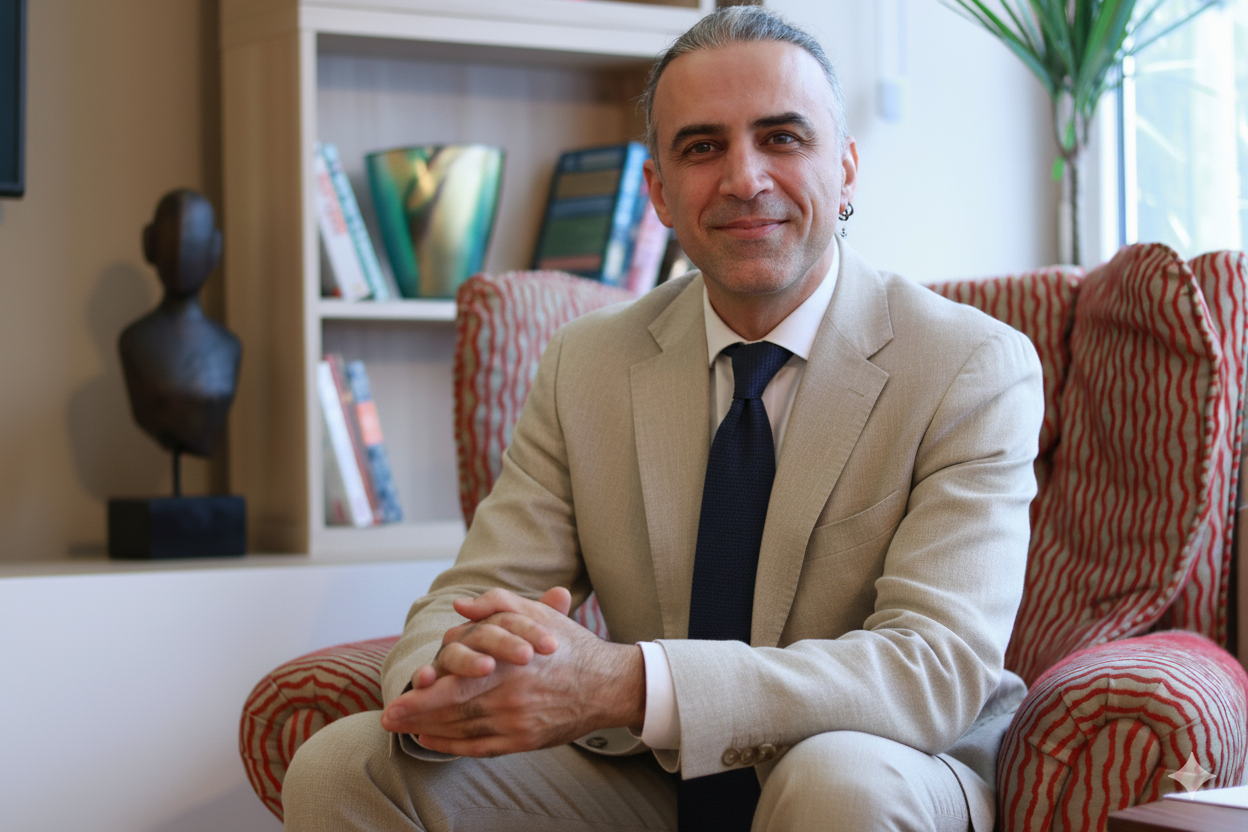
Prof. Dr. Ali Keyvan
Prof. Dr. Ali Keyvan is a psychiatrist and psychotherapist. He practises, teaches and supervises cognitive behavioural and dialectical behaviour therapy as well as psychodynamic therapy and group analysis, and is a founding member of the Istanbul Group Analysis Association (IstGA). He sees clients at his clinic in Nişantaşı, Istanbul, and online.